FreshLeaf
Automated Fresh Tea Brewing & Distillation Machine
An automated system that transforms freshly picked tea leaves into a natural, refreshing beverage — combining mechanical processing, thermal extraction and vapor condensation into a single embedded workflow.
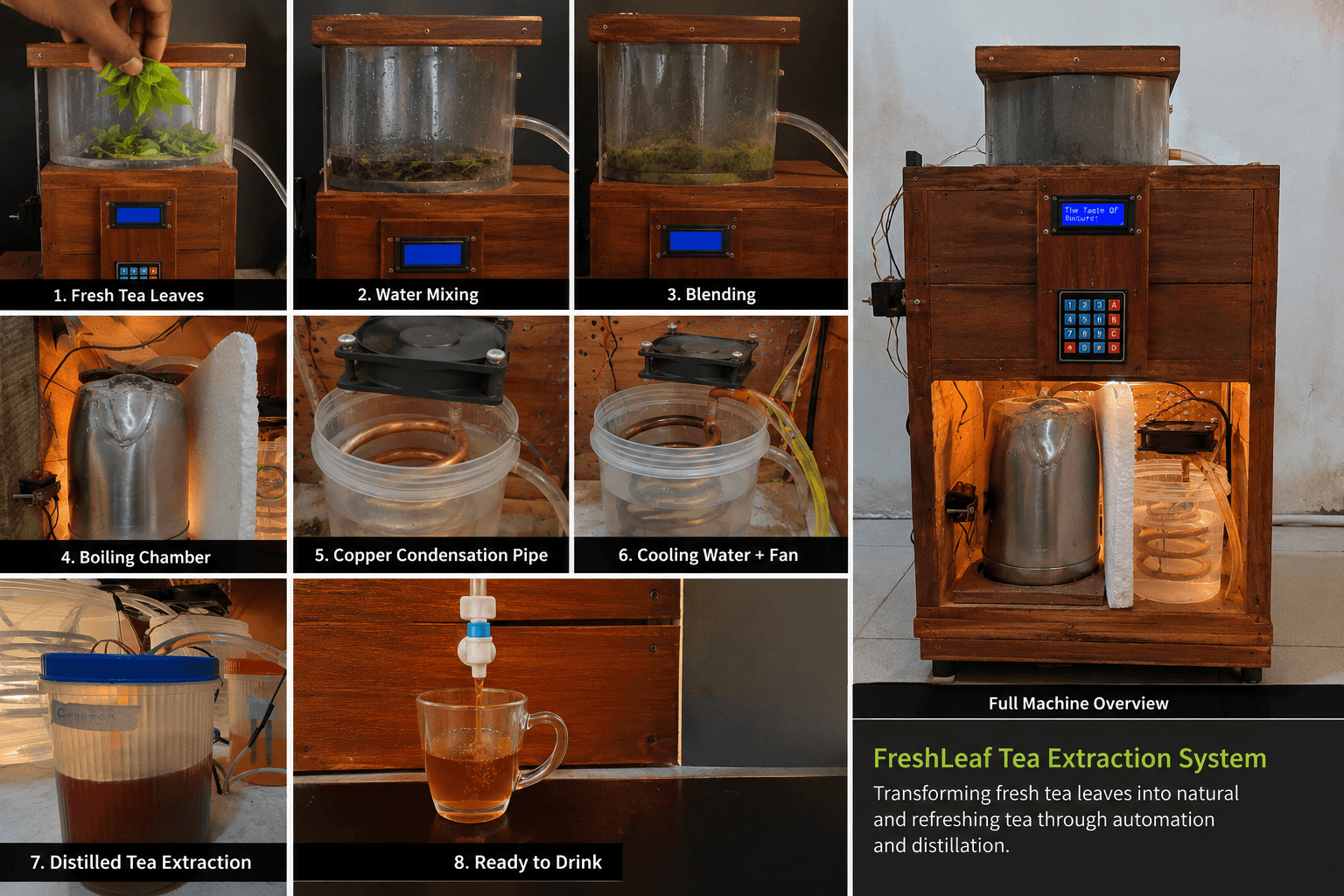
From fresh leaf to distilled cup — automatically.
Unlike conventional tea-making methods that rely on dried leaves, FreshLeaf preserves the authentic taste and aroma of freshly harvested tea by combining mechanical processing, thermal extraction and vapor condensation into a single automated workflow — built as a first-year hardware engineering project to explore how automation and embedded systems could modernize traditional tea preparation.
Project Vision
To create a machine capable of producing high-quality tea directly from fresh leaves with minimal human intervention — automating each stage to provide a consistent brewing experience and introduce a healthier, more natural way of consuming tea. The solution combines food processing, automation and embedded system design to show how a traditional preparation method can become a modern smart appliance.
The Problem With Manual Preparation
Crushing, boiling, filtering and extracting all require continuous manual attention
Results are inconsistent and depend heavily on the user's experience
Traditional methods don't efficiently extract the pure essence of fresh leaves
The process is too slow and hands-on for convenient everyday use
Ten steps, zero manual intervention.
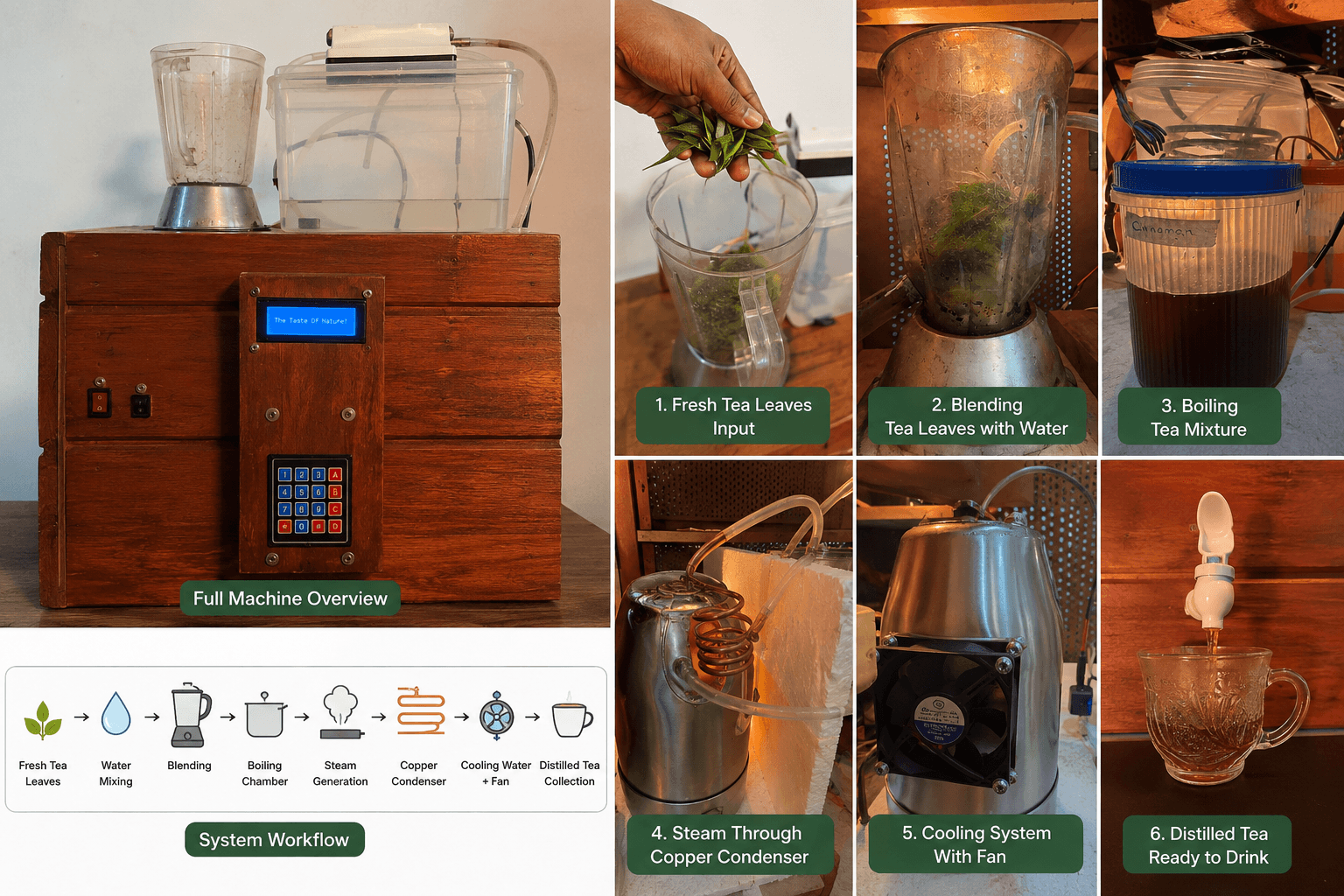
Fresh tea leaves are placed into the input chamber
Water is automatically added to the leaves
An integrated blender crushes and mixes the leaves with water
The prepared mixture is transferred to the boiling chamber
The mixture is heated until steam is generated
The steam passes through a copper condensation pipe
The copper pipe is continuously cooled using water and a cooling fan
The steam condenses back into purified liquid tea through distillation
The extracted tea is collected in the output container
Users may optionally add cinnamon or honey before consumption
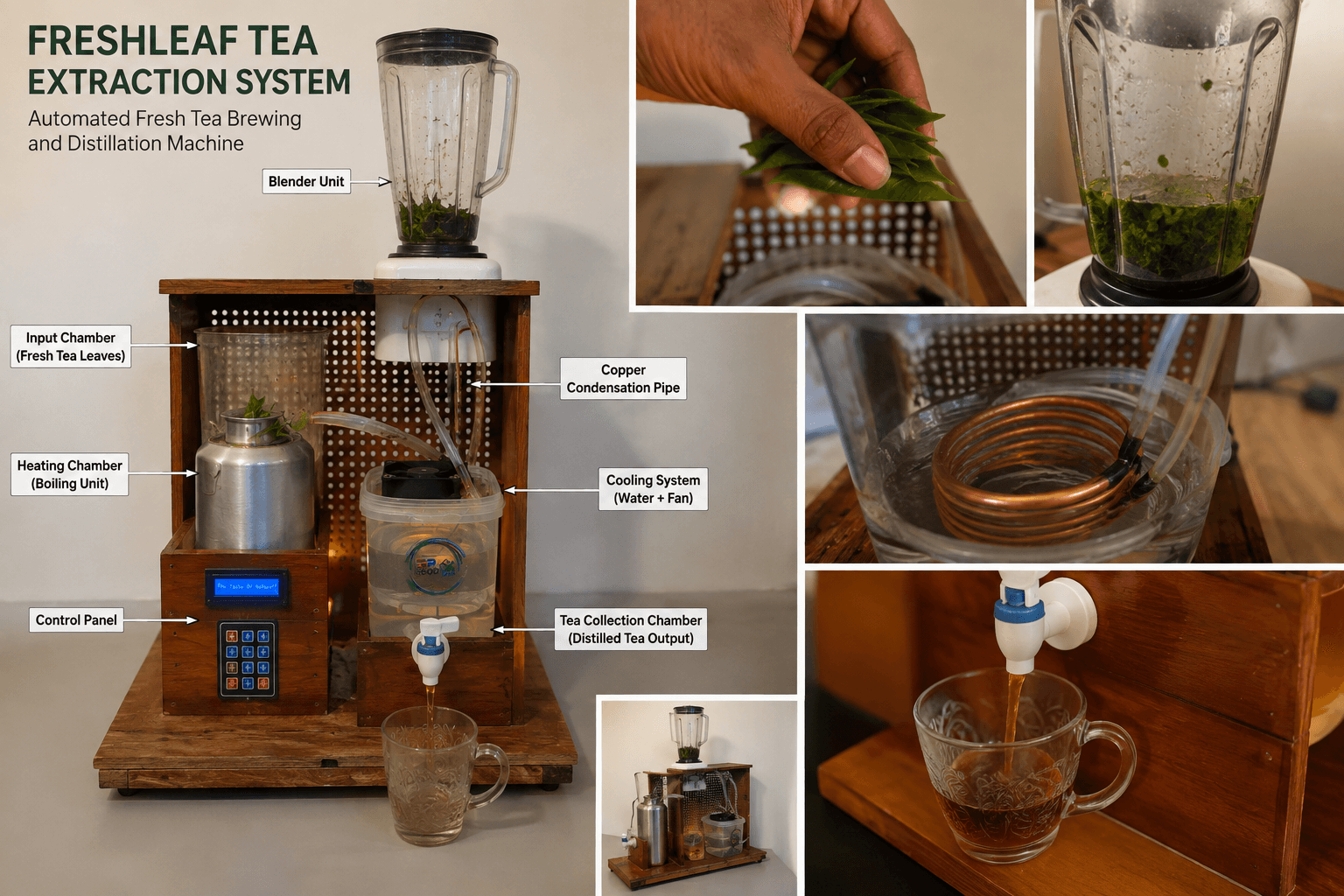
Seven components, one continuous flow.
Each stage of the machine performs a specific task before passing the mixture to the next processing unit, creating a continuous and automated production line inside a hand-built wooden housing.
Input Chamber
Allows freshly harvested tea leaves to be inserted into the machine.
Mixing System
Combines fresh tea leaves with water before processing.
Blender Unit
Mechanically crushes the tea leaves to improve extraction efficiency.
Heating Chamber
Boils the tea mixture until steam is produced.
Copper Condensation System
Transfers steam through a copper pipe submerged in cool water to convert it back into liquid.
Cooling Fan
Maintains a lower temperature around the condenser to improve condensation efficiency.
Tea Collection Chamber
Collects the distilled tea after the extraction process.
Prototyped in wood, modelled in Blender.
From leaf to cup — the nine physical stages of the build, followed by a 3D walkthrough of the machine created to plan and visualise the internal layout before assembly.
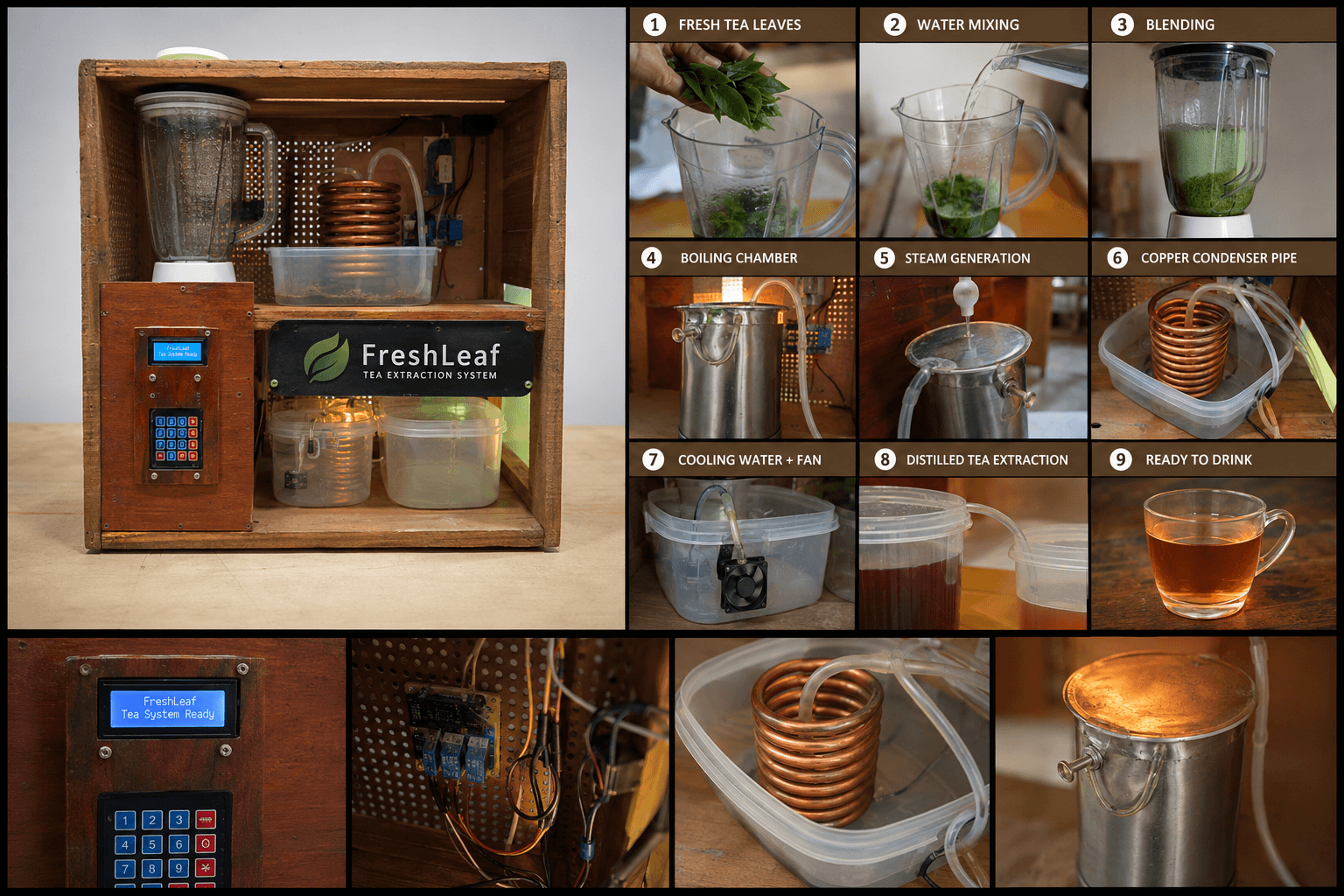
3D concept render of the FreshLeaf housing and internal layout, modelled in Blender ahead of physical assembly.
Eight disciplines, one working prototype.
Embedded Systems
Process Automation
Mechanical Integration
Thermal Processing
Distillation
Steam Condensation
Sequential Process Control
Sensor-Based Automation
Engineering is not individual parts —it's the whole system.
My Contribution
As a member of the development team, I participated in the design, assembly, testing and integration of the automated tea preparation system. The project provided practical experience combining hardware components, embedded controllers and mechanical subsystems into a complete working prototype — and introduced concepts such as hardware integration, workflow planning, collaborative engineering and prototype validation.
Key Learning Outcomes
System integration
Hardware prototyping
Process automation
Embedded system development
Team collaboration
Engineering problem solving
End-to-end workflow design
Five people, one working machine.
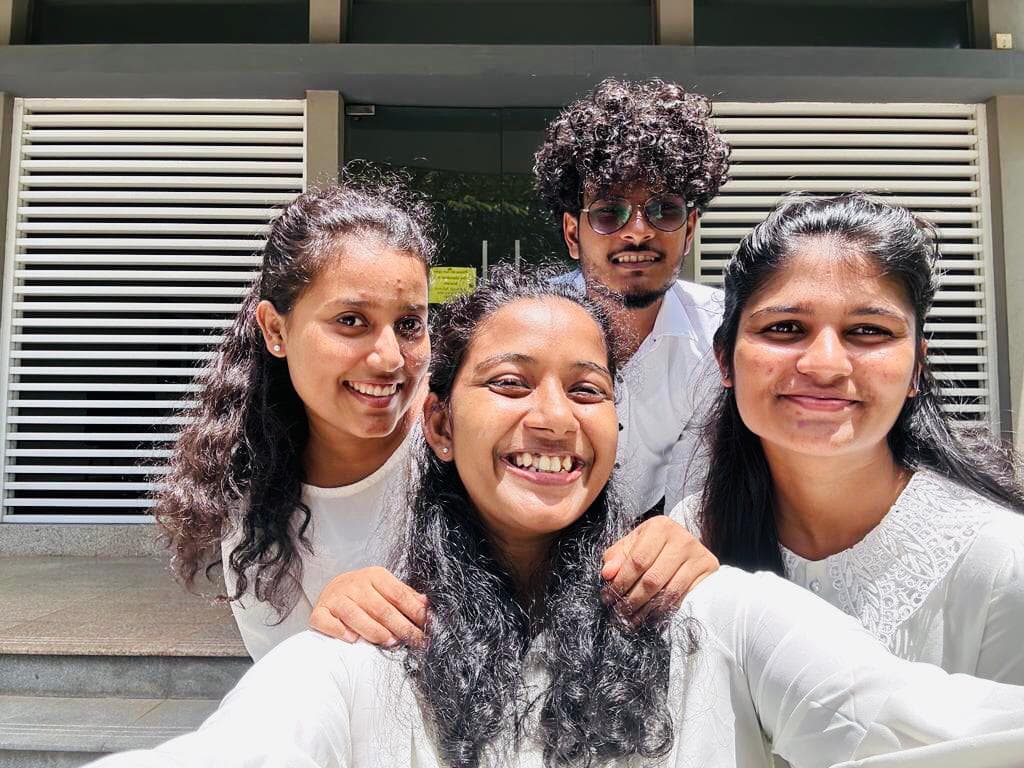
Pasan Athuluwage
Design, assembly & integration
Sithija Pahan
Sethmi Danoshi
Chatumi Janandi
Lalithya Karunathilake
Reflection
Where system thinking first took root.
Although this was one of my earliest engineering projects, it laid the foundation for my later interest in solution design and system thinking. Working on the FreshLeaf Tea Extraction System taught me how multiple technologies — embedded electronics, mechanical processes and automation — can be integrated into a cohesive solution that addresses a real-world need.
This experience sparked my passion for designing systems that combine technology with practical human use, an approach that continues to influence my work as a solution designer and software engineer today.
Back to Projects